
Augusta, GA · Garage Door Service
What Your Garage Door's Age Says About Your Augusta Home
Most garage doors across Augusta, GA and nearby towns like North Augusta and Clearwater date to the 1980s, built before insulation standards existed - here's what that means for your door.
- Repairs & new doors
- Springs & openers
- Serving 5 nearby communities
Doing Nothing For Now
Across the twelve communities we cover - North Augusta, Clearwater, Belvedere, Burnettown, Gloverville, Graniteville, Grovetown, Hephzibah, Jackson, New Ellenton, Blythe, and Harlem - most houses went up between 1966 and 2007, with the typical build year landing around 1985. That means a lot of the doors we see are either original or one replacement removed from original. If your door still opens and closes without binding, the track isn't bent, and the panels aren't rusted through at the bottom corners, you don't need to do anything right now. That's the honest answer, not a sales pitch. A door from the 1980s or 90s built on a steel frame without foam fill will still do its job for years if the hardware is maintained. Where it gets expensive is waiting past the point where a spring or cable lets go under load, because that's when a simple fix turns into a door off its track or a bent panel. Nothing wrong with running an older door. Just know what you're running, and don't mistake quiet operation for good condition - check it by hand once in a while, not just by ear.
What to Look At First
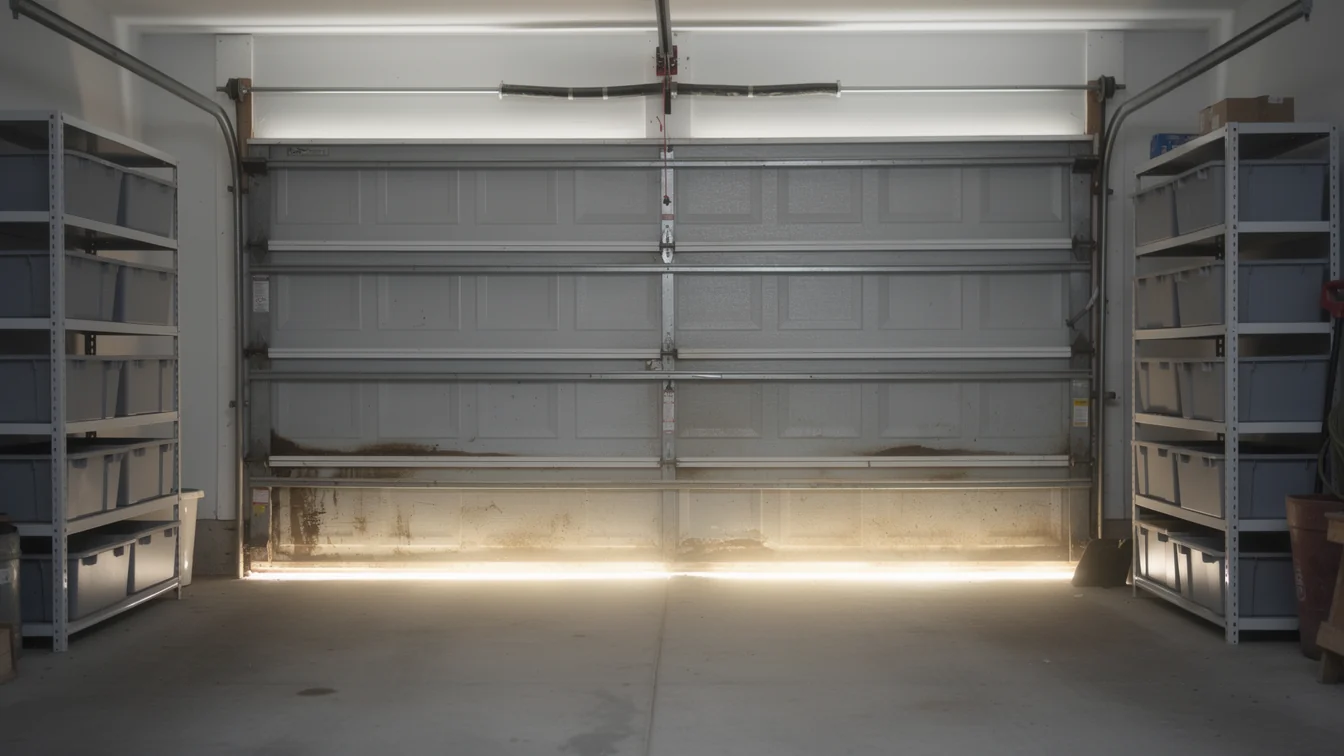
Insulation requirements for residential garage doors weren't standard practice when most of this area's housing stock went up - 1966 through 2007, median around 1985 - so these doors were built to keep out rain and keep the opener happy, not to hold an R-value. Start by looking at the bottom seal: on a door this age it's often cracked, flattened, or missing chunks, and that's the first place air and water get in. Next, run a hand along the panel seams. Steel doors from the 80s and 90s in this area are single-layer, no foam between the skins, so you'll feel the seam cold or warm depending on the day - that's normal for the build, not a defect. Check the bottom two panels for rust bubbling under the paint; that's the spot that sits closest to ground moisture and gets hit first. Last, look at the rollers and hinges for play - loose hinges on an original door usually mean the holes have worn oval over three or four decades of cycling, and that's a sign the track hardware is due, even if the door itself still looks fine.
The Problem
With a median household income of $51,180 across the service area and 14,753 owner-occupied houses out of 27,722 households, a full door replacement isn't the first move most homeowners here can make, and it usually shouldn't be. The real problem with doors from this era isn't that they're old - it's that they were built to a standard that didn't ask for insulation, so the steel skin does what steel does: it transfers temperature straight through, sweats on the inside face, and lets that moisture sit against the bottom panel and the floor track. Over enough years that shows up as rust at the corners and a bottom seal that's taken on a permanent set. None of that means the door is unsafe. It means the door is doing exactly what its 1985-era design was built to do, nothing more. Where we draw the line on repair versus replace is the spring and the panel, not the insulation - a non-insulated door with good springs and straight panels is worth keeping. One with a bowed panel from water sitting at the bottom usually isn't worth patching twice.
What the Weather Here Does to It
This area sits in a mild climate band with occasional freeze, not sustained hard cold. That matters for an older door because the damage pattern is different from what you'd see further north. Instead of one hard freeze cracking a seal outright, you get repeated overnight dips that stiffen the lubricant on hinges and rollers, then a daytime thaw that lets condensation form on the inside of an uninsulated steel panel. Do that enough winters in a row and the hinges start to squeal before they start to bind, and the bottom bracket collects enough moisture to rust from the inside out, where you can't see it until the metal's already thin. It's not dramatic weather. It's just enough freeze-thaw cycling, repeated over a build stock that runs from the mid-60s to the mid-2000s, to wear hardware faster than the door panel itself. If your opener has started straining on cold mornings and running fine by afternoon, that's usually the hinges and rollers telling you they're due, not the opener failing.
Frequently asked questions
Is my garage door too old if it was built in the 1980s?
Not necessarily. A lot of the housing stock in this area dates to the 1980s and 90s, and a steel door from that era can still run fine if the springs, rollers, and bottom seal have been kept up. Age alone isn't the problem - rust at the bottom panel, a worn bottom seal, or play in the hinges are the things worth acting on.
Should I replace my old door with an insulated one to save on energy?
We don't have the data to tell you what that saves on a power bill, so we won't claim a number. What we can say is an insulated door runs quieter and resists denting better. If your garage is attached to living space and you're noticing drafts, it's worth a look, but it's not an automatic yes.
Why does my door squeal in the morning but run fine by afternoon?
This area gets occasional overnight freezes without sustained deep cold, so hinges and rollers stiffen overnight and loosen up once the metal warms. That pattern usually points to hinges and rollers needing lubrication or replacement, not a failing opener.
How do I know if my door's bottom panel is rusting from moisture?
Check the bottom two panels for paint bubbling or a seam that feels soft when pressed. Doors from the 1980s and 90s building boom in this area are single-layer steel, so moisture sitting against the bottom track shows up there first, often before it's visible from the front.
Related garage door services in Augusta
More garage door guides
Book garage door service in Augusta
Call now or request a quote - tell us what the door is doing and where you are.