Augusta, GA · Garage Door Service
Openers and Power Outages in Augusta's Mixed-Age Housing
Augusta homes mostly date from 1966 to 2007, so garage door openers and backup options for power outages vary by house age. Here's what actually matters first.
- Repairs & new doors
- Springs & openers
- Serving 5 nearby communities
Doing Nothing For Now
It's easy to leave an opener alone until the day it won't open at all. In this service area, most houses went up between 1966 and 2007, with the bulk of that stock from the 1980s and 90s spread across twelve named areas. That matters because an opener installed when the house was built, or even a replacement unit from a decade later, is now old enough that its circuit board and drive gear are past the point where a bad power outage is just a nuisance - it can be the thing that finally kills the motor. Waiting costs you nothing until the chain binds mid-cycle or the board won't reset after the power comes back. We're not going to tell you every delay is a mistake. If the opener runs fine and reverses properly when you test it, there's no reason to replace it just because it has some years on it. But if you've already had one unexplained shutdown during a power outage, that's not a fluke - it's usually a capacitor or board on its way out, and doing nothing just moves the failure to a worse moment, like when the door's half open and the power won't come back for an hour.
What to Look At First
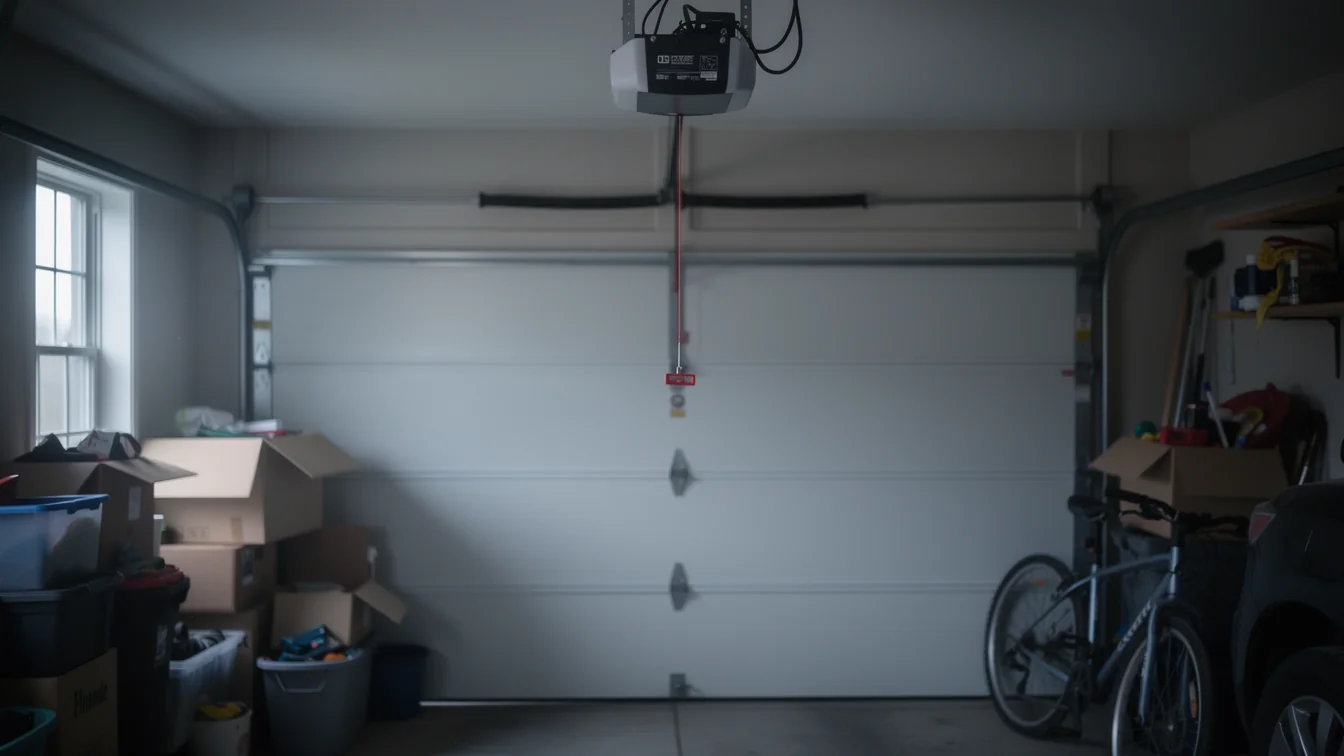
Start with the manual release cord - pull it and make sure the door moves freely by hand. If it's stuck or the door is heavy to lift, that's a spring problem, not an opener problem, and no amount of opener work fixes it. Next, check if your unit has battery backup. Homes built before the mid-1990s almost never came with it, and a lot of owners in this area are still running the original or first-replacement opener from that stock without one added. Without battery backup, a power outage means the door sits wherever it stopped - stuck open or stuck shut - until the power returns or someone uses the release cord. Third, look at the photo-eye sensors near the floor on each side of the track. These became standard safety equipment well after a lot of this area's housing was built, and we still find openers out there running without them or with sensors wired around because they kept false-tripping. That's worth fixing before it's worth upgrading anything else.
The Problem
The real issue isn't the opener itself most of the time - it's the mismatch between an opener's age and what the house around it expects. A door built for 1985-era hardware, torsion springs sized for the panel weight of that era, paired with an opener that's been swapped once or twice since, often ends up with a drive mechanism that's not quite matched to the door it's lifting. Add a power outage into that mix and you get a motor straining to restart against resistance it wasn't built for, which is where gears strip and boards fry. We see this most in houses that fall into that 1966 to 2007 window, since that's most of what's here. We can't tell you your specific opener's exact wear without seeing it - that's not something we'll guess at over the phone. What we can tell you is that an opener over 15 years old paired with frequent power interruptions is a bad combination worth checking before it becomes a locked-out door.
What the Weather Here Does to It
This area sits in a mild climate band with occasional freeze, not the deep cold that cracks openers in other parts of the country. That's the good news - you're not dealing with metal contracting hard enough to snap a drive chain the way colder regions do. The bad news is that mild-with-occasional-freeze means your opener's sensors and limit switches go through more freeze-thaw cycles than a steadily cold climate would put them through, since they're warming and cooling instead of just staying cold. That cycling is harder on seals and wiring connections than constant cold is. Combine an occasional overnight freeze with a power outage - which resets the opener's travel limits more often than owners realize - and you get a door that reverses early or won't fully close once the power's back. It's not dramatic weather, but it's the kind that quietly works on connections you don't check until the door stops behaving.
Frequently asked questions
My opener stopped working after a power outage. Is it the opener or something else?
Pull the manual release first. If the door moves freely by hand, it's electrical - likely the opener's board or a tripped limit setting. If the door is heavy or won't budge, that's a spring issue, which is a separate repair and shouldn't be forced through the opener.
Does my house need a battery backup opener?
If your home is older stock from this area's main building era, it probably doesn't have one. Battery backup keeps the door operable during a power outage instead of stuck wherever it stopped. It's worth adding if you've had a cut leave your door stuck before.
Why does my door act strange after the power comes back on?
Power outages can reset an opener's travel limits, which makes it stop short, reverse early, or not seal at the bottom. Reprogramming the limits usually fixes it. If it keeps happening after every outage, the board itself may be failing.
Related garage door services in Augusta
More garage door guides
Book garage door service in Augusta
Call now or request a quote - tell us what the door is doing and where you are.